
Key Takeaways
- Creative activities stimulate different areas of your brain and strengthen connections between them.
- Following craft instructions and learning new techniques helps improve your memory and recall skills.
- Group art projects provide social interaction that boosts your mental health and cognitive function.
- Simple daily crafts like watercolor painting or knitting can become part of your routine cognitive exercise.
- Assisted living and memory care communities often provide structured, creative programs with professional guidance.
Crafts and Cognitive Health
When you pick up a paintbrush, thread a needle, or shape a piece of clay, something remarkable happens in your brain. Creative activities do more than fill your time—they actively work to keep your mind sharp, your memory strong, and your thinking skills engaged.
Arts and crafts offer significant cognitive benefits for seniors by stimulating multiple brain areas, strengthening memory pathways, and providing meaningful social connections that support overall mental well-being. Dogwood Forest of Grayson understands this connection and provides creative spaces where residents can explore artistic interests while supporting their cognitive wellness.
What Arts and Crafts Activities Do for Your Brain
Creative activities work like a workout for your mind. When you paint, knit, or work with clay, you activate multiple brain regions at once. Your visual cortex processes colors and shapes while your motor cortex coordinates your hand movements.
The connection between your hands and brain runs deeper than you might think. Fine motor skills like holding a brush or manipulating small beads create new neural pathways. These pathways help maintain your dexterity and mental sharpness.
Problem-solving through art keeps your thinking flexible. You decide which color comes next, how to fix a knitting mistake, or where to place that next puzzle piece. Each decision exercises your cognitive abilities in a natural, enjoyable way.
Your senses get a workout, too. The texture of yarn, the smell of paint, and the satisfaction of completing a project all engage different parts of your brain. This sensory input helps maintain your mental alertness and awareness.
Memory Benefits You Can Expect from Creative Activities
Following craft instructions gives your memory a gentle but effective workout. You remember which stitch comes next, how many beads you need, or what color you used yesterday. This practice helps strengthen your recall abilities.
Learning new techniques creates fresh memory pathways in your brain. When you master a new embroidery stitch or painting method, you’re not just gaining a skill—you’re building cognitive resilience. Your brain becomes better at forming and retrieving memories.
Repetitive motions in crafts like knitting or crocheting help with memory retention. The rhythm and pattern of these activities can be meditative while also reinforcing neural connections. Many people find they remember things better after spending time on repetitive crafts.
Sharing stories about your projects helps you connect with meaningful memories. When you tell someone about the quilt you’re making or show off your latest painting, you’re actively engaging your long-term memory and strengthening those important connections. Research shows that musical improvisation enhances memory in older adults, and similar benefits apply to visual arts and crafts.
Social Connection Through Group Art Projects
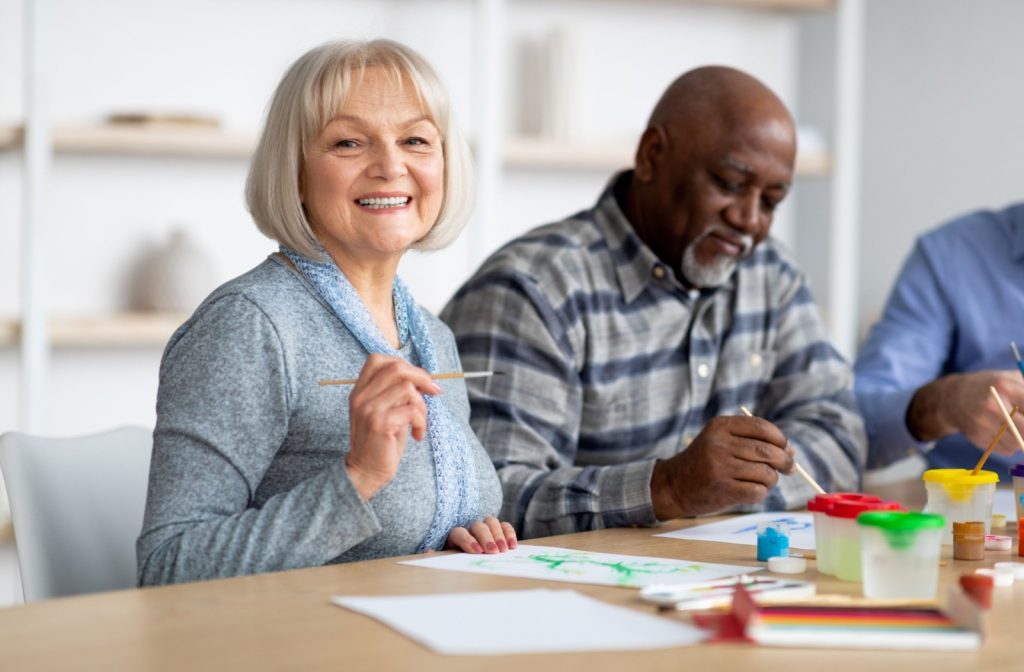
Working alongside others on creative projects boosts your mental well-being in ways that solo activities can’t match. The conversation, laughter, and shared focus create a supportive environment that benefits your cognitive health.
Shared creative experiences often bloom into lasting friendships. You might bond with someone over a love of watercolors or find yourself looking forward to weekly pottery sessions. These social connections provide cognitive stimulation and emotional support.
Teaching others your craft skills exercises different parts of your brain than learning does. When you show someone how to cast on stitches or blend colors, you use communication skills, patience, and memory in new combinations. Research reveals that social interactions contribute to happiness and cognitive wellness.
Group discussions during projects naturally stimulate your thinking. You might debate color choices, share techniques, or simply chat about your day. This social interaction keeps your mind engaged and your communication skills sharp.
Simple Craft Ideas That Support Cognitive Health
Low-Impact Activities for Daily Engagement
Watercolor painting offers gentle cognitive exercise with beautiful results. You don’t need expensive supplies—a basic set and some paper can provide hours of mental stimulation. The flow of colors and water engages your visual processing and creativity.
Simple knitting and crocheting projects work well for daily cognitive maintenance. Start with basic scarves or dishcloths that use repetitive patterns. The rhythmic motions can be calming while still challenging your memory and coordination.
Scrapbooking and photo organizing combine memory work with creativity. As you arrange photos and write captions, you’re actively engaging with your personal history and exercising your recall abilities. This activity connects your past with present creative expression.
Activities That Challenge Your Problem-Solving Skills
Puzzle-making and jigsaw assembly provide cognitive workouts. You use visual processing, pattern recognition, and logical thinking to find where each piece belongs. Start with puzzles that match your current abilities and gradually increase complexity.
Jewelry design and beading patterns combine creativity with mathematical thinking. Planning color sequences and counting beads exercises your numerical skills while creating something beautiful to wear or give as gifts.
Woodworking and carving projects engage your spatial reasoning and planning skills. Even simple projects like sanding or painting wooden pieces provide tactile stimulation and a sense of accomplishment.
Memory care programs often adapt creative activities for different cognitive needs. These specialized programs maintain the cognitive benefits of arts and crafts while adjusting complexity and providing additional support when needed.
Continue Exploring Creative Living at Dogwood Forest of Grayson
Creative expression is just one of the many ways residents support their cognitive health and overall well-being at Dogwood Forest of Grayson. Our community offers engaging programs, enriching activities, and supportive care designed to help seniors stay mentally active, socially connected, and inspired every day.
Whether you’re exploring assisted living or specialized memory care for a loved one, our team is here to help you find the right balance of support, independence, and meaningful daily engagement.
Visit our website to learn more about life at Dogwood Forest of Grayson, or contact our team to schedule a tour and experience our vibrant community firsthand.